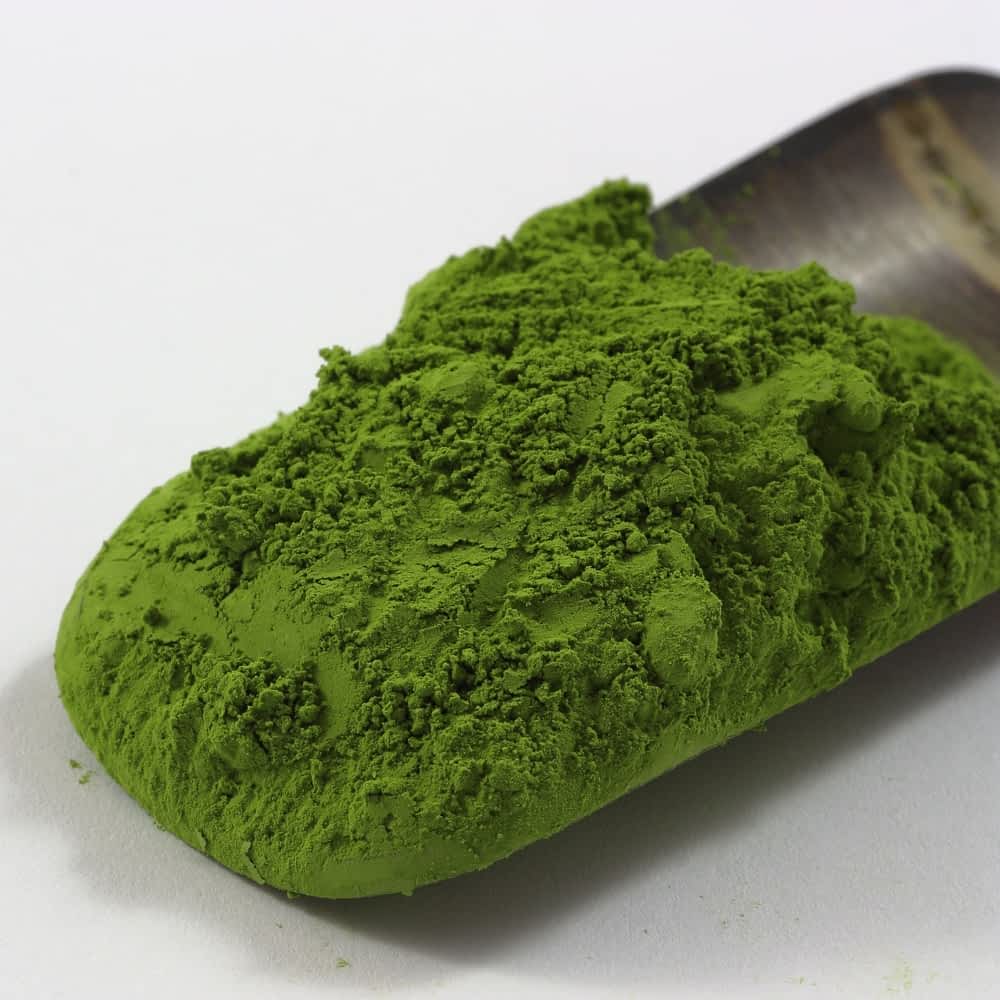


Organic Everyday Matcha · Gentle, Nutty & Rounded
Raw Almond · Walnut Skin · Floral · Fresh Vegetal
Matcha Evergreen BIO is a JAS Organic everyday matcha from Kagoshima, created from a blend of Yabukita, Okumidori, Saemidori and Tsuyuhikari. Gentle, light and smooth, it is particularly suited to regular Matcha Latte preparation.
Its sensory profile centres on raw almond, subtle walnut skin, floral notes and fresh vegetal character. With moderate sweetness, very low bitterness and very low astringency, Evergreen is appreciated for a rounded, approachable character that works harmoniously with milk rather than trying to overpower it.
Best For
Choose Matcha Evergreen BIO if you enjoy a gentle, nutty and rounded Matcha Latte. Its raw-almond and walnut-skin character complements milk naturally, making it a popular everyday choice among Tea Repertoire customers for its balance of character, versatility and value.
From the Tea Garden
Matcha Evergreen BIO comes from the same Kagoshima garden as Matcha Okumidori BIO and Matcha Saemidori BIO. The garden is led by a second-generation tea farmer dedicated to organic tea farming.
The tea gardens grow in volcanic, mineral-rich soil above cedar forest trees, in a particularly clean growing environment. We treat these as elements of the shared garden context without reducing Evergreen's final flavour to any single terroir factor.
Tea Repertoire Sensory Profile
Gentle · Nutty · Floral · Rounded
Raw Almond · Walnut Skin · Fresh Vegetal
Evergreen opens with raw almond, a clear but restrained floral dimension and fresh vegetal aromas.
On the palate, raw almond continues into a subtle walnut-skin nuance and gentle vegetal character. The texture is light, smooth and rounded, with moderate sweetness, very low bitterness, very low astringency and low vegetal umami.
The finish is vegetal and medium in length, with a subtle walnut-skin nuance.
Why this matters in a latte: Evergreen's affinity with milk comes from the harmony between its gentle nuttiness, light body and smooth, rounded mouthfeel—not from exceptional power or heavy umami.
Tea Repertoire Aroma Chart
Nutty: raw almond · walnut skin | Floral: floral | Vegetal: fresh vegetal
Why We Selected Matcha Evergreen BIO
A Gentle, Nutty Matcha Built for Everyday Latte Preparation
We selected Evergreen BIO for customers who want a regular Matcha Latte with a gentler, more nutty profile rather than a strongly green or umami-led expression. Its light, smooth and rounded texture allows the matcha and milk to complement one another naturally.
Evergreen also occupies a distinct role within the same Kagoshima garden as Okumidori BIO and Saemidori BIO. Rather than treating these matcha as a simple quality ladder, we recommend choosing between them according to the sensory experience and preparation you prefer.
Our recommendation: choose Evergreen BIO for a gentle, nutty JAS Organic everyday Matcha Latte, particularly when you value a smooth profile, regular versatility and strong everyday value.
Origin & Craftsmanship
Matcha Evergreen BIO comes from a JAS Organic Kagoshima garden led by a second-generation tea farmer. It is a four-cultivar blend made mainly from first-harvest material, with a small proportion from the second harvest.
Mainly First Harvest
Evergreen is made mainly from first-harvest leaves, complemented by a small proportion of second-harvest material. We therefore do not describe it as a 100% first-harvest matcha.
Four Weeks of Direct Covering
The first-harvest material is directly covered for approximately four weeks before harvest. The shading duration of the second-harvest material is not specified.
Four-Cultivar Blend
Evergreen combines Yabukita, Okumidori, Saemidori and Tsuyuhikari. We present the blend transparently without attributing any individual flavour note to a cultivar without evidence.
Stone-Milled · JAS Organic
The finished tencha is stone-milled into matcha. Evergreen BIO is JAS Organic certified and pesticide-free.
Evergreen BIO Cultivar Blend
The blend, harvest composition and craftsmanship are part of Evergreen's product identity, but we do not claim that any single production factor directly causes a specific tasting note.
Preparation Recommendations
Everyday Matcha Latte
- Sift 3 g of Matcha Evergreen BIO into a dry chawan.
- Add 150 ml of water at approximately 80°C.
- Whisk until evenly dispersed with a fine layer of foam.
- Add 100–150 ml warm milk according to the desired balance.
Iced Matcha Latte
- Sift 3 g of Matcha Evergreen BIO.
- Whisk with 150 ml water at approximately 80°C until smooth.
- Add 150 ml cold milk.
- Pour over ice and serve immediately.
Cold Matcha with Water
- Sift 1.5–2 g of matcha.
- Whisk or shake with a small amount of cold water until smooth.
- Add the remaining cold water and mix again.
- Serve as it is or over ice.
Usucha
- Sift 1.5–2 g of Matcha Evergreen BIO into a dry chawan.
- Add 90 ml of water at approximately 80°C.
- Whisk briskly until evenly dispersed and lightly foamed.
- Enjoy immediately.
Cakes · Cookies · Tiramisu · Ice Cream
Evergreen BIO is suitable for cakes, cookies, tiramisu and ice cream or gelato when you want a gentle, nutty matcha character. We do not classify it as a “culinary matcha”.
Not recommended for: refined Matcha Latte and Koicha. Evergreen is purposefully positioned for a more milk-forward everyday latte. For a more matcha-forward refined latte, consider Matcha Saemidori BIO.
Finding the Right Milk Balance
Evergreen's gentle nuttiness is designed to work harmoniously with milk. Rather than prescribing one universal milk type, we recommend adjusting the quantity according to how matcha-forward or milk-forward you want your everyday latte to taste.
100 ml Milk
Use approximately 100 ml milk with the standard 3 g / 150 ml matcha base when you want Evergreen's raw-almond, walnut-skin and vegetal character to remain more clearly present.
150 ml Milk
Move towards 150 ml milk when you want a softer, more milk-forward cup in which Evergreen's gentle nuttiness and rounded mouthfeel integrate more fully with the milk.
Finding your balance: start within the recommended 100–150 ml milk range and adjust to taste. Evergreen is selected for harmony with milk rather than for overpowering it.
How Should You Think About Matcha Quality?
Choose Matcha by Preparation, Not Simply by a Grade Label
There is no universally recognised official grading system in Japan that formally defines every matcha as “ceremonial”, “premium” or “culinary” grade.
At Tea Repertoire, we therefore prefer to explain matcha through its origin, cultivar, harvest, cultivation, craftsmanship, sensory character and intended preparation.
Matcha Evergreen BIO is a JAS Organic, stone-milled Kagoshima matcha made mainly from first-harvest material with a small proportion of second harvest. We recommend it primarily as an everyday Matcha Latte, with iced latte, cold matcha and baking as strong secondary uses. Usucha is possible, but it is not our primary recommendation, and Evergreen is not suitable for Koicha.
Understand Matcha Grades & Quality →Which Same-Garden Matcha Should You Choose?
Evergreen BIO, Okumidori BIO and Saemidori BIO come from the same organic Kagoshima garden, yet they offer clearly different sensory experiences. Choose according to the cup and preparation you enjoy rather than treating them as a simple quality ladder.
Matcha Evergreen BIO
Choose Evergreen for a lighter, smoother and more rounded matcha with raw almond, walnut skin, floral notes and low vegetal umami. Everyday Matcha Latte is its primary use.
Current product · Best fit for a gentle, nutty everyday Matcha Latte.Matcha Okumidori BIO
Choose Okumidori if you prefer a bolder, stronger and greener expression with a more vegetal-umami-forward profile and Usucha as the primary preparation.
Explore Matcha Okumidori BIO →Matcha Saemidori BIO
Choose Saemidori for a fuller, creamy and velvety matcha with macadamia, buttery greens and pronounced marine umami. Usucha is its primary preparation.
Explore Matcha Saemidori BIO →Tea Repertoire principle: the most useful difference is not simply price. Evergreen is gentle and nutty, Okumidori is bold and green, and Saemidori is creamy and marine-umami-rich.
Evergreen BIO or Matcha Latte Supreme?
Both are Tea Repertoire everyday Matcha Latte choices. We recommend deciding primarily according to the sensory profile you enjoy, with JAS Organic certification as an additional reason to choose Evergreen BIO.
Matcha Evergreen BIO
Raw almond, walnut skin, floral and fresh vegetal notes with a light, smooth and rounded mouthfeel. Choose Evergreen when you prefer a gentler, nutty latte and want JAS Organic certification.
Current product · Gentle, nutty and organic.Matcha Latte Supreme
Walnut, almond, watercress and fresh greens, with gentle umami, creamy texture, fuller body and delicate walnut-skin bitterness. Choose Latte Supreme when you want a more structured, creamy and full-bodied everyday latte.
Explore Matcha Latte Supreme →Continue Your Matcha Journey
Explore the Tea Repertoire Academy to understand matcha quality, preparation and how to choose the right matcha for the way you actually drink it.
Matcha Grades Explained
Learn why Tea Repertoire selects matcha according to origin, sensory character and intended preparation rather than relying on vague grade labels.
Read the Matcha Grades Guide →The Ultimate Guide to Matcha
Explore matcha cultivation, production, preparation and tasting in our broader introduction to Japanese matcha.
Explore the Ultimate Matcha Guide →The Ultimate Matcha Latte Guide
Learn how matcha selection, water-to-milk ratio and preparation choices influence the finished Matcha Latte.
Read the Matcha Latte Guide →How to Prepare an Iced Matcha Latte
Follow our step-by-step guide for preparing an iced Matcha Latte and understand the role of water, milk and ice.
Learn the Iced Matcha Latte Method →Complete Your Matcha Ritual
Traditional matcha utensils help disperse the powder evenly and make both water-based preparations and Matcha Latte bases easier to prepare consistently.
Chasen
A traditional bamboo whisk for dispersing matcha evenly and creating a smooth, well-integrated matcha base.
Explore the Bamboo Chasen →Chashaku
A traditional bamboo scoop used to portion matcha before sifting and whisking.
Explore the Bamboo Chashaku →Chawan
A matcha bowl gives you enough space to whisk the powder smoothly before serving it with water or combining it with milk.
Explore Matcha Bowls →How to Store Matcha Evergreen BIO
Keep Matcha Evergreen BIO tightly sealed and protected from heat, light, oxygen, moisture and strong odours. Store opened matcha in the refrigerator. Before reopening a refrigerated sealed container, allow it to move towards room temperature while still closed to help reduce condensation risk.
Frequently Asked Questions
Find quick answers about Matcha Evergreen BIO, its Kagoshima origin, sensory profile and recommended preparations.
What is Matcha Evergreen BIO?
Matcha Evergreen BIO is a JAS Organic, pesticide-free, stone-milled matcha from Kagoshima. It blends Yabukita, Okumidori, Saemidori and Tsuyuhikari and is made mainly from first-harvest material with a small proportion from the second harvest. Tea Repertoire recommends it primarily for everyday Matcha Latte.
What does Matcha Evergreen BIO taste like?
Its profile centres on raw almond, subtle walnut skin, floral notes and fresh vegetal character. The mouthfeel is light, smooth and rounded, with moderate sweetness, low vegetal umami, very low bitterness and very low astringency.
Is Matcha Evergreen BIO suitable for Matcha Latte?
Yes. Everyday Matcha Latte is our primary recommendation. Use 3 g of matcha with 150 ml water at approximately 80°C and add 100–150 ml milk according to how matcha-forward or milk-forward you want the final drink.
Can I make an Iced Matcha Latte with Matcha Evergreen BIO?
Yes. Use 3 g of Matcha Evergreen BIO, 150 ml water at approximately 80°C and 150 ml cold milk, then pour over ice. Read our Iced Matcha Latte guide for more preparation advice.
Can I drink Matcha Evergreen BIO as Usucha?
Yes, but Usucha is a secondary rather than primary recommendation for Evergreen BIO. Use 1.5–2 g with 90 ml water at approximately 80°C. If you prefer a more pronounced water-based matcha experience, compare Matcha Okumidori BIO and Matcha Saemidori BIO.
Is Matcha Evergreen BIO suitable for Koicha?
No. Tea Repertoire does not recommend Matcha Evergreen BIO for Koicha. Its intended role is primarily everyday Matcha Latte, followed by iced latte, cold matcha and baking or desserts.
What is the difference between Matcha Evergreen BIO and Matcha Okumidori BIO?
Both come from the same organic Kagoshima garden. Evergreen BIO is lighter, smoother, more rounded and more nutty-oriented, with floral notes and low vegetal umami. Matcha Okumidori BIO is bolder, stronger and greener, with a more vegetal-umami-forward profile and Usucha as its primary preparation.
What is the difference between Matcha Evergreen BIO and Matcha Saemidori BIO?
Evergreen BIO is lighter, gentler and more nutty-floral, while Matcha Saemidori BIO is fuller, creamy and velvety, with macadamia, buttery greens and pronounced marine umami. Saemidori is primarily selected for Usucha, while Evergreen is primarily selected for everyday Matcha Latte.
Evergreen BIO or Matcha Latte Supreme: which should I choose?
Both are purpose-specific everyday Matcha Latte choices. Choose Evergreen BIO for a gentler, lighter and JAS Organic matcha with raw-almond, walnut-skin, floral and vegetal notes. Choose Matcha Latte Supreme for a creamier, fuller-bodied and more structured nutty-vegetal latte profile.
Is Matcha Evergreen BIO a first-harvest matcha?
Not exclusively. Evergreen BIO is made mainly from first-harvest material with a small proportion from the second harvest. The first-harvest material is directly covered for approximately four weeks before harvest.
Which cultivars are used in Matcha Evergreen BIO?
Evergreen BIO is a four-cultivar blend of Yabukita, Okumidori, Saemidori and Tsuyuhikari. We do not attribute individual tasting notes to each cultivar without specific sensory evidence.
Is Matcha Evergreen BIO organic?
Yes. Matcha Evergreen BIO is JAS Organic certified and pesticide-free. It comes from the same organic Kagoshima garden as Matcha Okumidori BIO and Matcha Saemidori BIO.
Can I use Matcha Evergreen BIO for baking and desserts?
Yes. Evergreen BIO is suitable for cakes, cookies, tiramisu and ice cream or gelato when you want a gentle, nutty matcha character. Tea Repertoire does not classify it as “culinary matcha”.
How should I store Matcha Evergreen BIO after opening?
Keep it tightly sealed and protected from heat, light, oxygen, moisture and strong odours. Store opened matcha in the refrigerator. Before opening a refrigerated sealed container, allow it to move towards room temperature while still closed to help reduce condensation risk.