

Organic Saemidori Matcha · Creamy & Marine Umami
Macadamia · Buttery Greens · Marine Umami
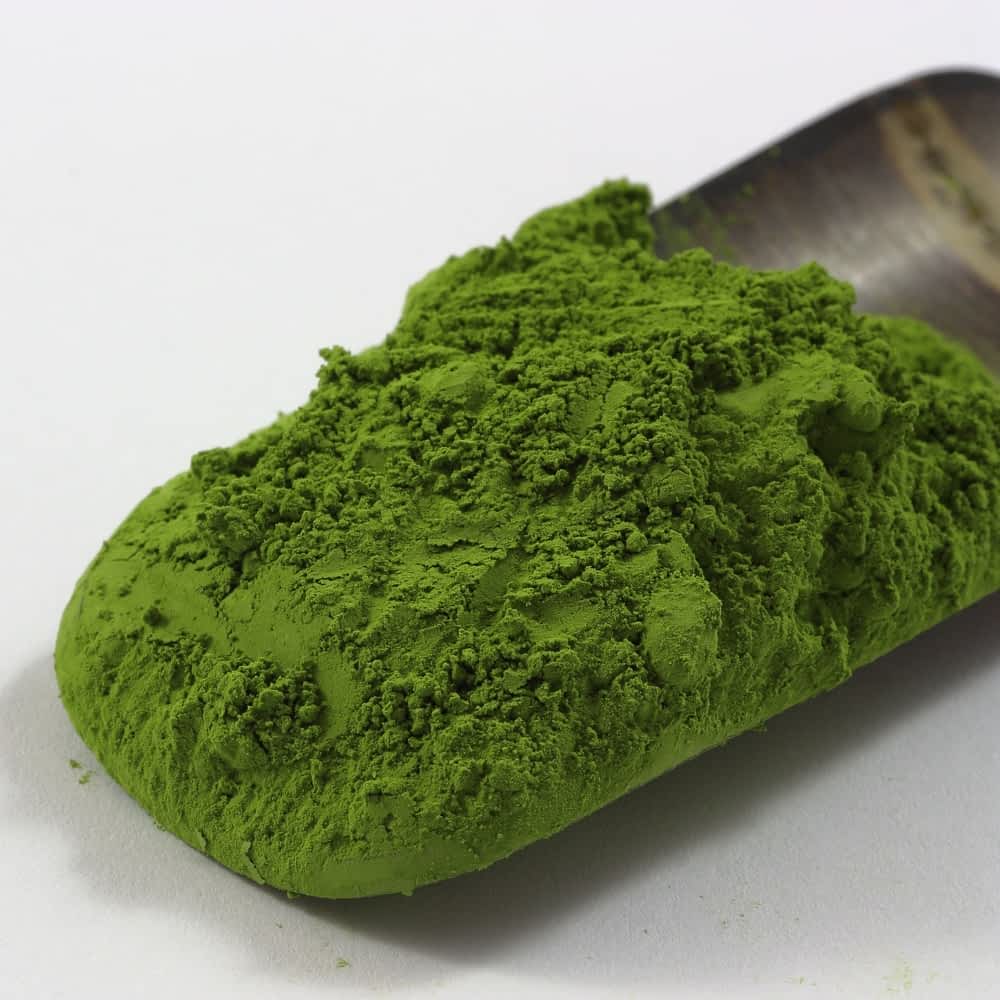
Matcha Saemidori BIO is a first-harvest JAS Organic matcha from Kagoshima, made exclusively from 100% Saemidori and selected for its particularly creamy, velvety texture and pronounced marine umami.
Macadamia opens the profile before moving towards buttery green notes and a lingering marine umami finish. With no perceived bitterness and very low astringency, Saemidori offers a rounded, full-bodied expression that we recommend first for Usucha, while retaining enough presence for cold matcha and refined milk preparations.
Best For
Choose Matcha Saemidori BIO if you enjoy a creamy, umami-forward matcha with a marine rather than strongly vegetal umami direction. We recommend it first as Usucha, while its full body and creaminess also make it particularly convincing with a restrained amount of milk.
From the Tea Garden
Matcha Saemidori BIO comes from the same Kagoshima garden as Matcha Okumidori BIO and Matcha Evergreen BIO. The garden is led by a second-generation tea farmer dedicated to organic tea farming.
The tea gardens grow in volcanic, mineral-rich soil above cedar forest trees, in a particularly clean growing environment. We treat these as important elements of the garden context without reducing Saemidori's final flavour to any single terroir factor.
Tea Repertoire Sensory Profile
Creamy · Velvety · Pronounced Marine Umami
Macadamia · Buttery Greens · Marine Umami
Saemidori begins with a rounded macadamia impression, followed by buttery green notes. Its defining character develops through a pronounced marine umami that lingers through the finish, carried by a full-bodied, creamy and velvety mouthfeel.
Tea Repertoire sensory direction: Saemidori's creamy texture and marine umami distinguish it from the bolder, greener and more vegetal umami expression of Matcha Okumidori BIO from the same garden.
Explore Saemidori's Aromatic Profile
The Tea Repertoire Aroma Chart will visually map the approved sensory direction: macadamia, buttery greens and marine umami.
Why We Selected Matcha Saemidori BIO
A Creamy Saemidori Built Around Pronounced Marine Umami
We selected Matcha Saemidori BIO for the clarity of its sensory identity: a full, velvety texture, pronounced umami, moderate sweetness and an almost complete absence of aggressive sensations, with no perceived bitterness and very low astringency.
Its macadamia and buttery-green character gives way to a distinctly marine umami direction. This creates a different experience from Matcha Okumidori BIO, even though both matcha come from the same Kagoshima garden.
Saemidori is first and foremost a matcha to appreciate with water as Usucha, but its natural creaminess also allows it to remain expressive in a refined latte with only a limited amount of milk.
Our recommendation: choose Matcha Saemidori BIO when you want pronounced umami and a creamy, velvety texture, with a marine rather than strongly vegetal sensory direction.
Origin & Craftsmanship
Matcha Saemidori BIO comes from a JAS Organic tea garden in Kagoshima led by a second-generation tea farmer dedicated to organic cultivation. The same garden also produces Matcha Okumidori BIO and Matcha Evergreen BIO, allowing us to present different matcha expressions within one shared garden context.
First Harvest · Ichibancha
Saemidori is produced from first-harvest spring leaves, placing Ichibancha at the foundation of this matcha's production.
Four Weeks of Direct Covering
Before harvest, the Saemidori plants are shaded for approximately four weeks using direct covering.
100% Saemidori
This is a single-cultivar matcha made entirely from Saemidori. Its sensory identity is expressed here through macadamia, buttery greens, pronounced marine umami and a particularly creamy texture.
Stone-Milled
After processing into tencha, the tea is stone-milled into fine matcha powder, supporting the smooth, velvety mouthfeel required for a refined bowl of Usucha.
One Cultivar, Different Expressions
Saemidori is a cultivar, not a fixed flavour recipe. Tea Repertoire carries other 100% Saemidori matcha from a different Kagoshima garden, demonstrating how garden, cultivation and craftsmanship also contribute to the final cup.
Comparing these matcha is a practical way to understand why cultivar transparency matters, while also recognising that cultivar alone does not determine flavour.
Preparation Recommendations
Usucha
- Sift 1.5–2 g of Matcha Saemidori BIO into a dry chawan.
- Add 60–80 ml of water at approximately 70–75°C.
- Whisk briskly with a chasen until evenly dispersed with a fine layer of foam.
- Enjoy immediately while the creamy texture and marine umami are at their clearest.
Cold Matcha with Water
- Sift 1.5–2 g of matcha.
- Whisk or shake first with a small amount of cold water until smooth.
- Add the remaining cold water and mix again.
- Serve as it is or over ice.
Refined Matcha Latte
- Sift 2–2.5 g of matcha.
- Whisk with the water until completely smooth.
- Add approximately 50 ml of warmed or cold milk.
- Keep the milk restrained so Saemidori remains the sensory focus.
Iced Matcha Latte
- Sift 2.5–3 g of Matcha Saemidori BIO.
- Whisk until smooth with 100–150 ml water.
- Add 50 ml milk.
- Pour over ice and serve immediately.
Koicha: Tea Repertoire does not recommend Matcha Saemidori BIO for Koicha. Its preferred expression is Usucha, followed by cold matcha and matcha-forward milk preparations.
Which Milk Pairs Best with Matcha Saemidori BIO?
Saemidori is primarily selected for its expression with water, but its naturally creamy mouthfeel also works particularly well with a small amount of milk. The goal is to complement the matcha rather than conceal its macadamia, buttery-green and marine umami character.
Whole Dairy Milk
Whole dairy milk reinforces Saemidori's creamy, velvety mouthfeel while keeping the matcha's pronounced umami clearly present when used in the recommended restrained quantity.
Oat Milk
A relatively neutral, unsweetened or lightly sweetened oat milk can add roundness without overwhelming Saemidori. Avoid heavily flavoured or very sweet versions if you want the matcha itself to remain central.
Finding the balance: we recommend approximately 50 ml milk for Saemidori's refined hot and iced latte preparations. For a milk-forward everyday latte, consider Matcha Evergreen BIO or Matcha Latte Supreme, which occupy a more purpose-specific everyday latte role in the Tea Repertoire collection.
How Should You Think About Matcha Quality?
Choose Matcha by Preparation, Not Simply by a Grade Label
There is no universally recognised official grading system in Japan that formally defines every matcha as “ceremonial”, “premium” or “culinary” grade.
At Tea Repertoire, we therefore prefer to explain matcha through its origin, cultivar, harvest, cultivation, craftsmanship, sensory character and intended preparation.
Matcha Saemidori BIO is a first-harvest, JAS Organic, stone-milled single-cultivar matcha that we recommend primarily for Usucha. It can also be enjoyed cold and in refined milk preparations, but we do not recommend it for Koicha.
Understand Matcha Grades & Quality →Which Matcha Should You Choose?
Saemidori BIO, Okumidori BIO and Evergreen BIO come from the same organic Kagoshima garden, but they fulfil different roles. Choose according to the experience and preparation you want, rather than treating them as a simple quality ladder.
Matcha Saemidori BIO
Choose Saemidori for a creamy, velvety matcha with macadamia, buttery greens and pronounced marine umami. Usucha is the primary preparation, with refined latte and cold preparations as strong alternatives.
Current product · Best fit for pronounced marine umami and creaminess.Matcha Okumidori BIO
Choose Okumidori if you prefer a bolder, stronger matcha with a more pronounced green character and a more vegetal umami direction.
Explore Matcha Okumidori BIO →Matcha Evergreen BIO
Choose Evergreen when your priority is a versatile organic everyday matcha, particularly for regular milk-based preparation and stronger value for frequent latte use.
Explore Matcha Evergreen BIO →Tea Repertoire principle: higher price does not automatically mean the right choice for every preparation. Saemidori sits above Evergreen BIO in intended price and quality positioning, but the most useful distinction is what each matcha is designed to express in the cup.
Continue Your Matcha Journey
Explore the Tea Repertoire Academy to deepen your understanding of matcha quality, preparation and sensory appreciation.
Matcha Grades & Quality Guide
Learn why Tea Repertoire recommends choosing matcha through origin, cultivar, craftsmanship, sensory profile and intended preparation rather than relying on a universal grade label.
Read the Guide →The Ultimate Guide to Matcha
Explore matcha cultivation, production, preparation and tasting in our broader introduction to Japanese matcha.
Explore the Ultimate Matcha Guide →The Ultimate Matcha Latte Guide
Learn how matcha selection, water-to-milk ratio and milk choice change the final latte, including refined matcha-forward preparations.
Read the Matcha Latte Guide →How to Prepare an Iced Matcha Latte
Follow our step-by-step method for making a balanced iced matcha latte and understand how ice, water and milk affect the finished drink.
Learn the Iced Matcha Latte Method →Complete Your Matcha Ritual
The right tools make matcha easier to prepare and help you achieve a smooth, consistent texture—particularly when preparing Saemidori as Usucha.
Chasen
A traditional bamboo whisk designed to disperse matcha evenly and create the fine foam associated with a well-prepared bowl of Usucha.
Explore the Bamboo Matcha Whisk →Chawan
A matcha bowl provides the space and shape needed for the chasen to move freely and whisk Saemidori evenly.
Explore Matcha Bowls →Chashaku
A traditional bamboo scoop used for measuring and handling matcha before whisking.
Explore the Bamboo Matcha Scoop →Frequently Asked Questions
Find quick answers about Matcha Saemidori BIO, its sensory profile, origin and recommended preparations.
What is Matcha Saemidori BIO?
Matcha Saemidori BIO is a 100% Saemidori, first-harvest JAS Organic matcha from Kagoshima. The tea plants are directly covered for approximately four weeks before harvest, and the resulting tencha is stone-milled into matcha. It is also pesticide-free.
What does Matcha Saemidori BIO taste like?
Its profile centres on macadamia, buttery greens and pronounced marine umami. The mouthfeel is full-bodied, creamy and velvety, with moderate sweetness, no perceived bitterness, very low astringency and a lingering umami-led finish.
Is Matcha Saemidori BIO suitable for Usucha?
Yes. Usucha is our primary recommendation. Use 1.5–2 g of matcha with 60–80 ml of water at approximately 70–75°C to experience its creamy texture and marine umami without milk.
Is Matcha Saemidori BIO suitable for Koicha?
No. Tea Repertoire does not recommend Matcha Saemidori BIO for Koicha. A matcha can perform beautifully as Usucha without necessarily being suited to the much more concentrated Koicha preparation.
Can I use Matcha Saemidori BIO for Matcha Latte?
Yes. We particularly recommend a refined, matcha-forward latte using 2–2.5 g matcha, 150–200 ml water and approximately 50 ml milk. For an iced version, use 2.5–3 g matcha, 100–150 ml water, 50 ml milk and ice.
Saemidori is also suitable for an everyday latte, although customers who mainly make milk-forward drinks may find Matcha Evergreen BIO or Matcha Latte Supreme more purpose-specific.
What is the difference between Matcha Saemidori BIO and Matcha Okumidori BIO?
Both come from the same organic Kagoshima garden, but they offer clearly different sensory expressions. Saemidori BIO is creamier and more umami-forward, with a marine umami direction. Matcha Okumidori BIO is bolder, stronger and greener, with a more vegetal umami character.
Is Matcha Saemidori BIO organic?
Yes. Matcha Saemidori BIO is JAS Organic certified and pesticide-free. It comes from a Kagoshima garden led by a second-generation tea farmer dedicated to organic tea farming.
How should I store Matcha Saemidori BIO after opening?
Keep the matcha tightly sealed and protected from heat, light, oxygen, moisture and strong odours. Store opened matcha in the refrigerator. Before reopening a refrigerated sealed container, allow it to move towards room temperature while still closed to help reduce condensation risk.