
Premium Matcha for Latte · Barista Edition
Walnut · Almond · Fresh Greens
A smooth and expressive first-harvest matcha from Uji, Kyoto, crafted from Yabukita and Okumidori cultivars and selected especially for preparations with milk.
Creamy and nutty, with fresh vegetal notes, gentle umami and a delicate walnut-skin bitterness, Matcha Latte Supreme has enough structure to remain beautifully expressive when combined with milk.
Best For
Choose Matcha Latte Supreme when milk is an important part of your preparation. Its creamy body, nutty character and gentle structure allow the matcha to remain expressive in both hot and iced lattes.
From the Tea Garden
Tea Repertoire Sensory Profile
Walnut · Almond · Fresh Greens
Nutty character with fresh vegetal depth and gentle umami
Matcha Latte Supreme opens with fresh vegetal aromas reminiscent of watercress and young greens, followed by a rounded nutty character of walnut and almond.
On the palate, gentle umami and a naturally creamy texture create a smooth foundation. A delicate bitterness reminiscent of walnut skin adds structure and helps the matcha remain expressive when combined with milk.
The finish is persistent, clean and distinctly nutty.
Why this matters in a latte: milk softens the vegetal character and gentle bitterness while allowing the walnut and almond notes to become rounder and creamier.
Why We Selected This Matcha
A Matcha Chosen Specifically for Milk-Based Preparations
Not every matcha needs to serve the same purpose. At Tea Repertoire, we select matcha according to how it tastes and how it will be prepared, rather than relying solely on commercial grade terminology.
Matcha Latte Supreme was selected because its flavour remains expressive when combined with milk. Its creamy body and walnut and almond character provide richness, while fresh vegetal notes and gentle walnut-skin bitterness give it enough structure to remain clearly identifiable in the cup.
Our recommendation: choose Matcha Latte Supreme when milk is an important part of your preparation and you want a creamy, nutty matcha character that remains expressive in the finished drink.
Origin & Craftsmanship
Matcha Latte Supreme comes from a historic tea garden in Uji, Kyoto, established in the early twentieth century. Its character is shaped by first-harvest leaves, approximately four weeks of shading, the complementary qualities of Yabukita and Okumidori, and traditional stone milling.
First Harvest · Ichibancha
The leaves are picked during the first harvest of the year, known in Japan as Ichibancha. These young spring leaves form the foundation of the matcha's fresh vegetal character and smooth texture.
Approximately 4 Weeks of Shading
Before harvest, the tea plants are shaded for approximately four weeks. This contributes to the matcha's vivid colour, depth and characteristic umami.
Yabukita & Okumidori
The complementary cultivars help create the balance between vegetal freshness, structure, roundness and creamy mouthfeel that defines Matcha Latte Supreme.
Traditional Stone Milling
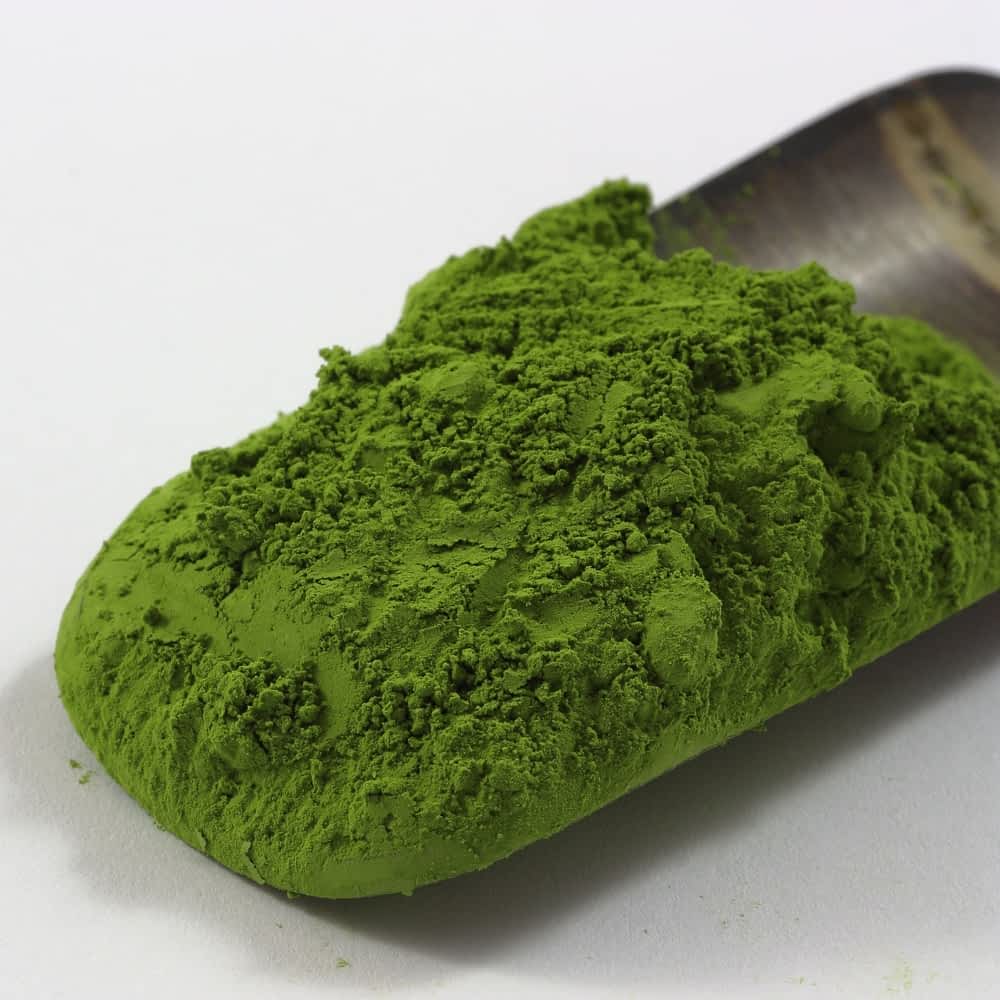
After processing, the tea is traditionally stone-milled into an exceptionally fine matcha powder, contributing to its smooth texture and vibrant jade-green appearance.
Understanding the Cultivar Blend
In the cup: these elements come together to create a distinctive balance of fresh greens, walnut, almond, gentle umami and creamy texture.
How to Prepare Matcha Latte Supreme
Classic Matcha Latte
- Sift 3 g of matcha into a matcha bowl.
- Add 30–50 ml of water at 75–80°C.
- Whisk briskly with a bamboo chasen until smooth and lightly frothy.
- Add approximately 150 ml of warm or steamed milk.
Iced Matcha Latte
- Sift 3 g of matcha into a bowl.
- Add 100–150 ml of water at 75–80°C.
- Whisk until completely smooth.
- Fill a glass with ice and add 100–150 ml of cold milk.
- Pour the prepared matcha over the milk and ice.
Adjust to taste: use closer to 100 ml of milk for a more matcha-forward cup, or move towards 150 ml for a softer and creamier latte.
Tea Repertoire Tip: avoid boiling water. Approximately 75–80°C helps preserve the balance between vegetal freshness, umami and the matcha's distinctive nutty character.
Want to explore matcha latte preparation in greater detail?
Explore the Ultimate Matcha Latte Guide →Which Milk Works Best?
Oat Milk
Oat milk complements Matcha Latte Supreme's walnut and almond character while reinforcing its naturally creamy texture. It creates a rounded latte without overwhelming the matcha.
Whole Dairy Milk
Whole milk creates a rich, rounded cup and softens the matcha's fresh vegetal notes and gentle walnut-skin bitterness.
Soy Milk
Soy milk provides good body while allowing the matcha's savoury and umami character to remain noticeable.
Coconut Milk
Coconut milk creates a richer and more aromatic interpretation. Its distinctive character influences the matcha more strongly than oat or dairy milk.
Finding your balance: the more milk you add, the less of the matcha's individual sensory character you will perceive. Start with less milk and adjust according to taste.
Is Matcha Latte Supreme Ceremonial Grade?
Choose Matcha by Preparation, Not Simply by Grade
There is no universally recognised official grading system in Japan that formally defines matcha as “ceremonial”, “premium” or “culinary” grade.
At Tea Repertoire, we therefore prefer to help you choose matcha according to its origin, craftsmanship, sensory character and intended preparation.
Matcha Latte Supreme is produced from first-harvest, shade-grown Japanese tea leaves and traditionally stone-milled in Uji. We recommend it primarily for preparations containing milk and describe it as a premium everyday matcha for latte preparation.
If you mainly enjoy matcha pure with water as Usucha or Koicha, we recommend selecting a matcha whose sensory profile has been chosen specifically for those preparations.
Understand Matcha Grades & Quality →Which Matcha Is Right for You?
The best matcha for you depends first on how you intend to prepare it.
Classic & Iced Matcha Latte
Choose a matcha with enough body and structure to remain expressive alongside milk.
Matcha Latte Supreme is our recommended choice for this preparation.Ceremonial Matcha Latte
Choose a matcha where cultivar, terroir and individual sensory character remain central to the cup.
Explore Matcha →Usucha
Choose a matcha selected specifically to be enjoyed whisked with water.
Explore Matcha for Usucha →Koicha
Choose a matcha suited to an intense preparation using very little water and no milk.
Explore Matcha for Koicha →Tea Repertoire principle: let the preparation guide the matcha you choose — not simply the grade written on the packaging.
Continue Your Matcha Journey
Matcha Grades & Quality Guide
Understand matcha quality terminology and why preparation is a better way to choose your matcha.
Read the Guide →The Ultimate Guide to Matcha
Explore matcha cultivation, processing, preparation and sensory appreciation.
Explore the Guide →The Ultimate Matcha Latte Guide
Learn how matcha choice, ratios and milk influence your latte.
Explore the Guide →How to Prepare an Iced Matcha Latte
Follow our step-by-step method for a balanced and refreshing iced matcha latte.
Learn the Method →Complete Your Matcha Ritual
The right tools make matcha easier to prepare and help create a smoother, more consistent texture.
Chasen
A traditional bamboo whisk designed to disperse matcha evenly and create a smooth, lightly frothy texture.
Explore Chasen →Chawan
A matcha bowl provides the space and shape needed to whisk comfortably and achieve a smooth preparation.
Explore Chawan →Chashaku
A traditional bamboo scoop used for measuring and handling matcha before whisking.
Explore Chashaku →Frequently Asked Questions
Is Matcha Latte Supreme good for matcha latte?
Yes. Matcha Latte Supreme has been selected specifically for preparations with milk. Its creamy body, walnut and almond character, fresh vegetal notes and gentle bitterness allow the matcha to remain expressive in both hot and iced lattes.
Is Matcha Latte Supreme ceremonial grade?
Tea Repertoire does not rely on “ceremonial grade” as a universal quality classification. Matcha Latte Supreme is a first-harvest, shade-grown and stone-milled Uji matcha that we describe as a premium everyday matcha for latte preparation.
Where does Matcha Latte Supreme come from?
Matcha Latte Supreme comes from Uji, Kyoto, Japan.
Which cultivars are used?
It is made from a blend of Yabukita and Okumidori.
Is Matcha Latte Supreme first-harvest matcha?
Yes. It is produced from first-harvest, or Ichibancha, tea leaves.
How long is the tea shaded before harvest?
The tea plants are shaded for approximately four weeks before harvest.
Is Matcha Latte Supreme stone-milled?
Yes. The tea is traditionally stone-milled into a very fine matcha powder.
How much matcha should I use for a latte?
We recommend approximately 3 g of matcha with 30–50 ml of water at 75–80°C and approximately 150 ml of milk.
Can I make an iced matcha latte with it?
Yes. Whisk 3 g of Matcha Latte Supreme with 100–150 ml of water, then pour it over ice and approximately 100–150 ml of cold milk.
Which milk works best?
Our first recommendation is oat milk. Whole dairy milk and soy milk are also excellent options.
Can I drink Matcha Latte Supreme with water?
Yes, although it has been selected primarily for preparations with milk. If you mainly enjoy matcha pure with water as Usucha, we recommend selecting a matcha specifically suited to that preparation.
How should I choose between different Tea Repertoire matcha?
Start with how you intend to prepare it. Read our Matcha Grades & Quality Guide to understand the Tea Repertoire approach.
How should I store Matcha Latte Supreme after opening?
Keep Matcha Latte Supreme tightly sealed and protected from heat, light, oxygen, moisture and strong odours. If stored in the refrigerator, allow the sealed tin to reach room temperature before opening to help reduce condensation.