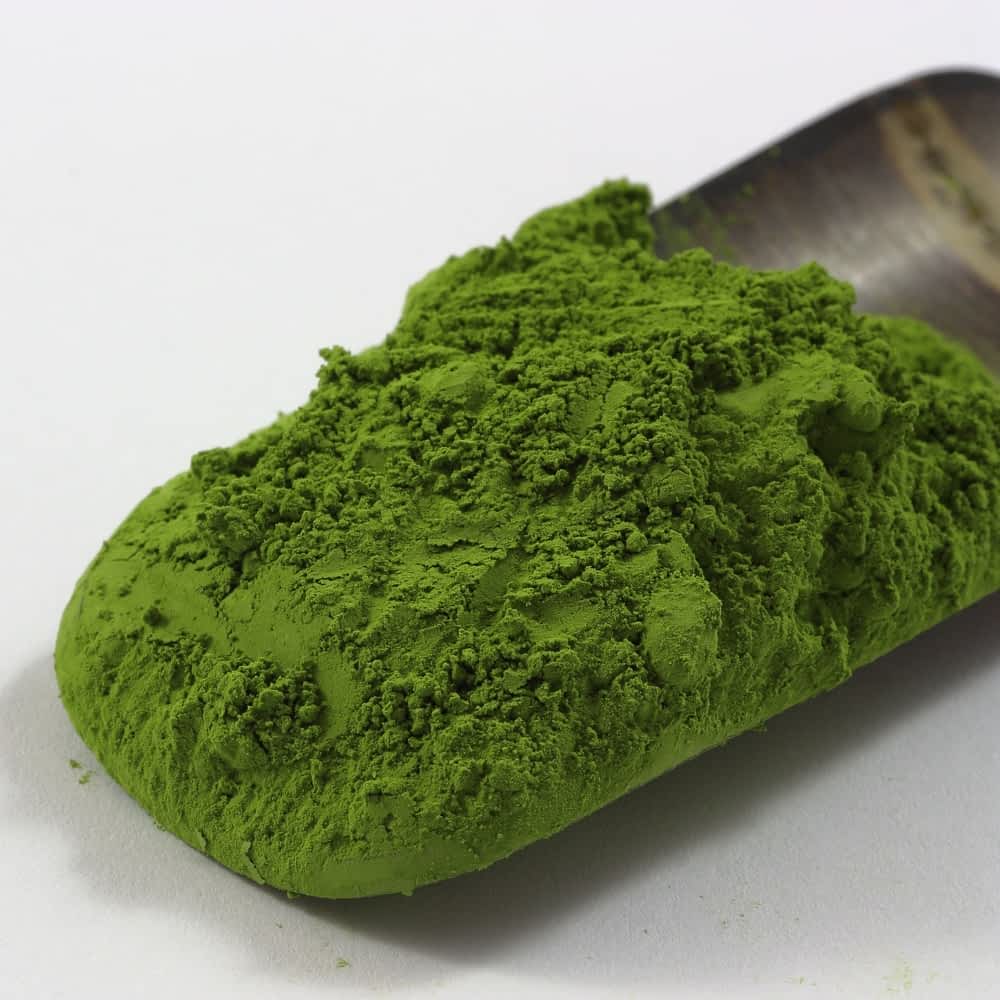


A Bold Organic Okumidori for Usucha & Refined Matcha Latte
Walnut · Buttered Greens · Velvety Umami
Matcha Okumidori BIO is a first-harvest JAS Organic matcha from Kagoshima, made exclusively from the Okumidori cultivar. Bold and full-bodied, it combines pronounced walnut notes, buttered steamed greens and deep umami with a velvety texture and refreshing finish.
Its intensity and pronounced green character make it particularly versatile: refined enough to enjoy pure as Usucha, yet expressive enough to retain its personality with a restrained amount of milk. For those looking for an organic single-cultivar matcha that performs beautifully both with water and milk, Okumidori is one of our most versatile recommendations.
Best For
Choose Matcha Okumidori BIO if you are looking for a bold, nutty organic matcha that can be enjoyed both pure and with milk. We particularly recommend it for Usucha and a refined Matcha Latte, where its walnut, green and umami character remains clearly present.
From the Tea Garden
The garden is led by a second-generation tea farmer dedicated to organic tea farming. Its tea fields are located in Kagoshima on volcanic, mineral-rich soils above cedar forest trees, in a particularly clean growing environment. The same garden also produces Tea Repertoire's Matcha Saemidori and Matcha Evergreen BIO.
Tea Repertoire Sensory Profile
Bold · Nutty · Vegetal · Umami
Walnut · Buttered Greens · Velvety Umami
Matcha Okumidori BIO opens with sweet, buttery aromas of walnut, raw hazelnut and buttery shortbread. On the palate, these nutty notes meet buttered steamed greens and a pronounced vegetal character, followed by lingering umami sweetness and a refreshing green and subtly floral finish.
Its texture is full-bodied and velvety: bold enough to remain expressive with milk, yet smooth and low in bitterness when carefully prepared with water.
How it develops in the cup: walnut and buttery shortbread open the profile, followed by full-bodied walnut and buttered greens, before velvety umami sweetness and a fresh green, subtly floral finish emerge.
Why We Selected This Matcha
A Bold Organic Matcha That Works Beautifully with Water and Milk
At Tea Repertoire, we assess matcha through origin, cultivar, cultivation, craftsmanship, sensory profile and intended preparation, rather than relying solely on a marketing grade.
Okumidori stood out for its combination of intensity, pronounced green character, full body and distinctive walnut notes. It is refined enough for Usucha, while its nutty, vegetal and umami-rich profile has enough presence to remain clearly recognisable in a Matcha Latte.
This makes it particularly suitable for those who do not want to choose between a matcha for drinking pure and a separate matcha for milk. At the same time, its accessible positioning allows it to be enjoyed regularly in lattes without reducing Okumidori to a purely everyday latte matcha.
Our recommendation: choose Matcha Okumidori BIO if you appreciate bold green character, walnut notes and a velvety texture, and want an organic single-cultivar matcha that excels both as Usucha and in a refined Matcha Latte.
Origin & Craftsmanship
Matcha Okumidori BIO comes from an organically managed tea garden in Kagoshima, where a second-generation tea farmer cultivates tea on volcanic, mineral-rich soils. Its character is shaped by first harvest leaves, four weeks of direct covering, the Okumidori cultivar and traditional stone milling.
First Harvest · Ichibancha
Matcha Okumidori BIO is made from the first harvest of the year, known as Ichibancha.
4 Weeks of Direct Covering
The tea plants are directly covered for four weeks before harvest.
100% Okumidori
This single-cultivar matcha is made exclusively from Okumidori, keeping the expression of this cultivar from the Kagoshima garden at the centre of the cup.
Stone-Milled
The finished tencha is stone-milled into a fine matcha powder, contributing to the velvety texture characteristic of Okumidori.
JAS Organic
The garden is dedicated to organic tea farming. Matcha Okumidori BIO is JAS Organic certified and pesticide-free.
Volcanic Kagoshima Terroir
The tea grows in volcanic, mineral-rich soil in gardens situated above cedar forest trees, forming part of the distinctive environment in which this Okumidori is cultivated.
Understanding Okumidori Through Origin
Comparing two Okumidori matcha shows why cultivar is only part of the story. Garden, origin and cultivation also contribute to how a matcha expresses itself in the cup. Discover Matcha Uji Hana BIO to explore another interpretation of the same cultivar.
How to Prepare Matcha Okumidori BIO
Usucha
- Sift 1.5–2 g of matcha into a chawan.
- Add 70–80 ml of water at approximately 75–80°C.
- Whisk briskly with a chasen until evenly dispersed with a fine layer of foam.
- Enjoy immediately.
Why Usucha: water allows Okumidori's full body, walnut character, buttered greens and lingering umami to appear with particular clarity.
Refined Matcha Latte
- Sift 2.5-3 g of matcha.
- Whisk with 150–200 ml of water.
- Add approximately 50 ml of milk.
- Adjust the water quantity according to your preferred intensity.
The restrained quantity of milk preserves Okumidori's walnut, green and umami character while adding further roundness to its full-bodied texture.
Cold Matcha with Water
- Add sifted matcha to cold water.
- Whisk or shake thoroughly until evenly dispersed.
- Serve well chilled, with ice if desired.
Cold preparation highlights Okumidori's vivid green character and refreshing finish while retaining its nutty nuances.
Iced Matcha Latte
- Whisk 2.5-3 g of matcha with 100–150 ml of water.
- Pour over ice.
- Add 50–100 ml of cold milk depending on the balance you prefer.
Use less milk for a more matcha-forward cup. Up to 100 ml creates a softer, more classically latte-style balance.
For more guidance on ratios and techniques for preparing matcha with milk, explore our detailed guide.
Read the Ultimate Matcha Latte Guide →Finding the Right Balance with Milk
Okumidori's bold green character, walnut notes and full body give it enough structure to pair confidently with milk. For its most refined expression, however, we recommend keeping the matcha itself at the centre of the preparation.
Restrained Milk
Around 50 ml of milk complements Okumidori's velvety body and nutty character without masking its buttered-green and umami dimensions.
More Milk
Thanks to its intensity and accessible positioning, Okumidori can also be used for a larger everyday Matcha Latte. As the quantity of milk increases, however, its characteristic walnut, green and umami notes become progressively softer.
Tea Repertoire principle: choose Okumidori when you want the matcha itself to remain clearly present. For a more milk-forward organic everyday Matcha Latte, compare it with Matcha Evergreen BIO. If your priority is clearly Matcha Latte, discover Matcha Latte Supreme.
Where Does Matcha Okumidori BIO Fit?
Choose by Preparation — Not Only by a Grade Label
Japan does not have one universal official grading system defining every matcha marketed as “ceremonial grade”. At Tea Repertoire, we therefore consider origin, cultivar, harvest, cultivation, craftsmanship, sensory profile and intended preparation.
Matcha Okumidori BIO has been selected for drinking pure as Usucha, while its bold body and nutty-green character also make it particularly suitable for a refined Matcha Latte. We do not recommend it for Koicha.
Explore our Matcha Grades & Quality Guide →Which Matcha Is Right for You?
Matcha Okumidori BIO occupies an interesting position between pure matcha and milk-based preparation. These comparisons can help you decide whether its profile suits the way you enjoy matcha.
Matcha Okumidori BIO
Choose it for a bold, full-bodied organic matcha with walnut notes, pronounced green character and velvety umami that performs particularly well as Usucha and in a refined Matcha Latte.
Ideal if you want one expressive matcha for both water and milk.Matcha Uji Hana BIO
Choose Uji Hana if you want to explore a different interpretation of Okumidori from Uji. Its profile is earthier than the more walnut-driven Kagoshima expression of Okumidori BIO.
Discover Matcha Uji Hana BIO →Matcha Evergreen BIO
Choose Evergreen BIO if value and regular preparation with milk are the priority. Okumidori is higher grade, stronger and more vivid in colour, while also being refined enough to enjoy as Usucha.
Discover Matcha Evergreen BIO →Matcha Saemidori BIO
Both come from the same garden in Kagoshima. Choose Okumidori if you prefer a bolder, stronger matcha with a more pronounced green character.
Discover Matcha Saemidori BIO →Tea Repertoire principle: begin with how you want to prepare your matcha, then refine your choice according to cultivar, sensory profile, origin and personal preference.
Deepen Your Matcha Knowledge
Explore the Tea Repertoire Academy to understand how cultivar, preparation and sensory character can help you select matcha beyond simple marketing labels.
The Ultimate Guide to Matcha
Learn more about matcha cultivation, production, preparation and tasting.
Read the Ultimate Guide to Matcha →How to Make an Iced Matcha Latte
Follow our step-by-step method and adjust the quantity of milk to keep Okumidori's character clearly present.
Read the Iced Matcha Latte Guide →Complete Your Matcha Ritual
The right utensils make preparation more consistent and help you experience Okumidori's full-bodied, velvety texture, particularly when preparing Usucha.
Chasen
The traditional bamboo matcha whisk helps disperse the matcha evenly and creates a fine, light layer of foam.
Discover the Chasen Matcha Whisk →Chawan
A matcha bowl provides the space and shape needed to whisk matcha comfortably and prepare traditional Usucha.
Discover Matcha Bowls & Chawan →Chashaku
The traditional bamboo scoop is used to measure and handle matcha before whisking.
Discover the Chashaku Matcha Scoop →Frequently Asked Questions
What is Matcha Okumidori BIO?
Matcha Okumidori BIO is a JAS Organic certified, pesticide-free matcha from Kagoshima, made exclusively from the Okumidori cultivar. It comes from the first harvest, is directly covered for four weeks and is then stone-milled.
What does Matcha Okumidori BIO taste like?
Its sensory profile is bold, nutty, vegetal and umami-rich, with notes of walnut, raw hazelnut, buttery shortbread and buttered steamed greens. Its texture is full-bodied and velvety, with lingering umami sweetness and a fresh green, subtly floral finish.
Is Matcha Okumidori BIO suitable for Usucha?
Yes. Usucha is one of our primary recommendations for Matcha Okumidori BIO. Use 1.5–2 g of matcha with 70–80 ml of water at approximately 75–80°C.
Is Matcha Okumidori BIO suitable for Koicha?
No. Tea Repertoire does not recommend Matcha Okumidori BIO for Koicha. A matcha suitable for Usucha is not automatically suitable for the much more concentrated Koicha preparation.
Can I use Matcha Okumidori BIO for Matcha Latte?
Yes. We particularly recommend a refined, matcha-forward latte using 2.5-3 g of matcha, 150–200 ml of water and approximately 50 ml of milk. Its bold body and walnut-green character remain clearly present with milk.
How is Matcha Okumidori BIO different from Matcha Evergreen BIO?
Both come from the same organic garden in Kagoshima. Evergreen BIO is more focused on regular preparation with milk and everyday value. Matcha Okumidori BIO is higher grade, stronger and more vivid in colour, while also having the refinement required to enjoy it as Usucha.
How is Matcha Okumidori BIO different from Matcha Uji Hana BIO?
Both are Okumidori matcha, but they express the cultivar differently. Matcha Okumidori BIO from Kagoshima is less earthy and more walnut-driven, while Matcha Uji Hana BIO from Uji offers a more earthy interpretation of Okumidori.
Is Matcha Okumidori BIO organic?
Yes. Matcha Okumidori BIO is JAS Organic certified and pesticide-free. It comes from a Kagoshima garden led by a second-generation tea farmer dedicated to organic tea farming.
How should I store Matcha Okumidori BIO after opening?
Keep the matcha tightly sealed and protected from heat, light, oxygen, moisture and strong odours. If storing it in the refrigerator, allow the closed container to return towards room temperature before opening to reduce the risk of condensation.