

Elegant Uji Matcha for Usucha
Avocado · Almond · Marine Umami
Matcha Bliss is a first-harvest Uji Matcha from Wazuka, Kyoto Prefecture, blended from Sayamakaori, Samidori and Uji Hikari cultivars and selected primarily for drinking pure as Usucha.
Its profile is elegant and balanced, combining moderate sweetness and marine umami with a creamy, smooth texture, no perceived bitterness and very low astringency. Watercress and sorrel open the cup before softer avocado, almond and buttery notes develop towards a sustained nutty finish.
Best For
Choose Matcha Bliss when you mainly drink matcha with water and want an elegant, balanced Usucha with moderate sweetness, marine umami, no bitterness and very low astringency. If you mainly prepare matcha with milk, or want one matcha for several different uses, we recommend Matcha Delight instead.
From the Tea Garden
Matcha Bliss received 1 Star at the Great Taste Awards 2019. We treat this as supporting recognition rather than as a substitute for explaining the tea's origin, sensory profile and intended preparation.
Tea Repertoire Sensory Profile
Sweet · Vegetal · Marine Umami
Avocado · Almond · Marine Umami
Matcha Bliss opens with fresh watercress and sorrel, then becomes rounder through avocado, almond and buttery green notes. Moderate sweetness and marine umami form the centre of the cup, supported by a creamy, smooth texture and a clean structure with no bitterness and very low astringency.
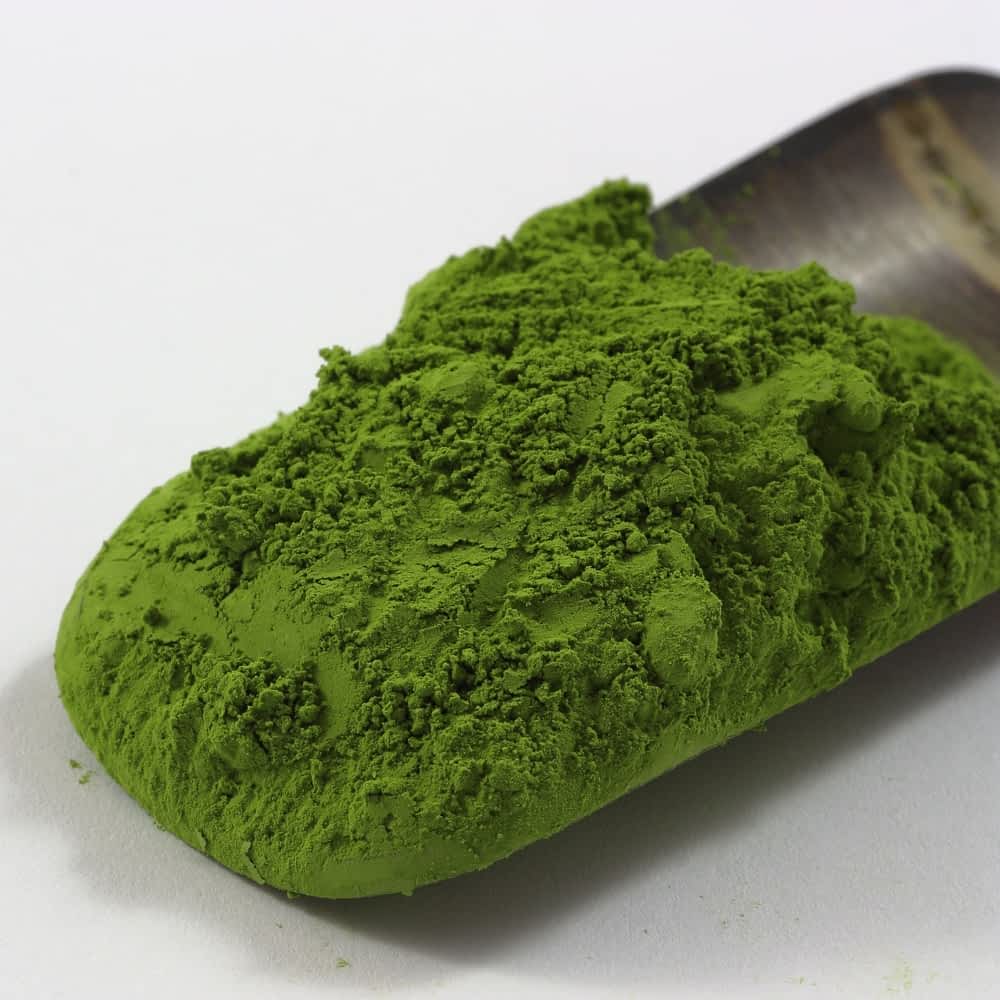
The powder is a vivid bright green. Its aroma is sweet and nutty, while the palate remains medium-bodied and refreshing, finishing with a sustained nutty character of medium length.
Aroma Chart vocabulary: Avocado · Almond · Watercress · Sorrel · Marine Umami.
Why We Selected Matcha Bliss
Elegance and Balance When Matcha Is Prepared Simply with Water
We selected Matcha Bliss for its performance as pure matcha. Prepared as Usucha, it brings together moderate sweetness and marine umami with a creamy, smooth texture, no bitterness and very low astringency.
Its character is expressive without becoming heavy. Fresh vegetal notes move through avocado, almond and a buttery dimension before settling into a sustained nutty finish.
Bliss is blended from Sayamakaori, Samidori and Uji Hikari. This is a different cultivar composition from Matcha Delight, even though both matcha come from the same Wazuka producer and garden.
Our recommendation: choose Matcha Bliss when your priority is Usucha and you want sweetness, smoothness and marine umami to remain fully exposed without milk.
Origin & Craftsmanship
Matcha Bliss is grown in Wazuka, Kyoto Prefecture and qualifies as Uji Matcha. It is produced from several tea plots in the same garden as Matcha Delight, using first-harvest leaves from a blend of Sayamakaori, Samidori and Uji Hikari.
Wazuka · Uji Matcha
The tea plants are physically grown in Wazuka, Kyoto Prefecture. The finished tea is appropriately designated as Uji Matcha.
First Harvest · Ichibancha
Matcha Bliss is produced from first-harvest leaves. No later-harvest material is used in the frozen product specification.
Four Weeks of Shading
The tea plants used for Matcha Bliss are shaded for four weeks before harvest. The precise shading method is not stated because it has not been validated for this product.
Tencha · Stone-Milled in Uji
After processing into tencha, the tea is stone-milled in Uji into the fine powder used for Matcha Bliss.
A Three-Cultivar Blend
We keep production facts separate from tasting observations: the cultivar blend, first harvest, shading, tencha processing and stone milling describe how Bliss is made; avocado, almond, watercress, sorrel and marine umami describe what Tea Repertoire perceives when tasting the finished matcha.
How to Prepare Matcha Bliss
Usucha
- Sift 2 g of Matcha Bliss into a dry chawan.
- Add 60–70 ml of water at 80°C.
- Whisk briskly with a chasen until the matcha is evenly suspended and a fine foam forms.
- Drink immediately while its sweetness, marine umami and texture are most clearly expressed.
This is our preferred preparation for Matcha Bliss and the reason it occupies a different role from the more versatile Matcha Delight.
Cold Matcha with Water
- Sift 2 g of Matcha Bliss.
- Disperse it first with a small amount of cold water until smooth.
- Add the remaining cold water and whisk or shake thoroughly.
- Use around 150 ml for a more concentrated cup or move towards 200 ml for a lighter expression.
Bliss is not recommended for milk-forward lattes, Koicha or baking. Those preparations do not reflect the purpose for which this matcha was selected.
How We Think About Matcha Quality
Choose Matcha by Origin, Sensory Profile and Preparation — Not by a Grade Name Alone
Japan does not have one universal official grading system that defines terms such as “ceremonial grade”. At Tea Repertoire, we therefore explain matcha through its origin, cultivar, harvest, shading, craftsmanship, sensory profile and intended preparation.
Matcha Bliss is a good example of why this matters. Its value is not that it carries a particular grade label or costs more than another matcha. It is that its balance, sweetness, low astringency and lack of bitterness make it particularly compelling when enjoyed pure as Usucha.
A different matcha may be the better choice when milk, baking or broader versatility is the priority.
Understand Matcha Grades & Quality →Matcha Bliss or Matcha Delight?
Bliss and Delight come from the same Wazuka producer and garden, but they serve different purposes. The right choice depends primarily on how you intend to prepare your matcha.
Choose Matcha Bliss
Choose Bliss if Usucha is your priority and you value moderate sweetness, marine umami, creamy smoothness, no bitterness and very low astringency.
Its blend of Sayamakaori, Samidori and Uji Hikari gives it a different cultivar composition from Delight, while its medium body and elegant balance are particularly suited to pure preparation.
Best fit: Usucha ★★★★★ · Cold Matcha ★★★★☆Choose Matcha Delight
Choose Delight if you want one accessible Uji Matcha for frequent and varied use across everyday Matcha Latte, iced latte, cold Matcha, occasional Usucha and baking.
Delight is approximately 90% Yabukita and has a fuller, nuttier profile built around walnut, watercress and marine umami.
Discover Matcha Delight →Tea Repertoire principle: a higher price does not automatically mean a better matcha for every use. If your daily drink is a Matcha Latte, Matcha Delight is the more appropriate recommendation. Choose Bliss when the qualities you want are those revealed by pure preparation.
Tea Repertoire Academy
Explore our practical guides to understand how origin, cultivar, preparation and sensory structure help you choose and prepare Matcha.
Matcha Grades & Quality Guide
Learn why matcha cannot be reduced to a single grade label and how to compare products through origin, sensory profile and intended preparation.
Read the Matcha Grades & Quality Guide →The Ultimate Guide to Matcha
Explore Matcha preparation, essential tools and the main ways this Japanese powdered tea can be enjoyed.
Read the Ultimate Guide to Matcha →Complete Your Matcha Ritual
Because Matcha Bliss is selected primarily for Usucha, simple preparation tools help you achieve an even texture and appreciate the matcha without adding other ingredients.
Chasen · Bamboo Matcha Whisk
A traditional bamboo whisk helps disperse Matcha Bliss evenly through the water and create the fine foam associated with Usucha.
Explore the Bamboo Matcha Whisk →Chashaku · Bamboo Matcha Scoop
A traditional bamboo scoop provides a simple way to portion Matcha before weighing or whisking.
Explore the Bamboo Matcha Scoop →Chawan · Matcha Bowl
A wide Matcha bowl gives the chasen room to move freely and makes whisking a smooth, even Usucha easier.
Explore Matcha Bowls →Matcha Bliss FAQ
Practical answers about the origin, flavour, preparation and positioning of Matcha Bliss.
Where does Matcha Bliss come from?
Matcha Bliss is grown in Wazuka, Kyoto Prefecture, Japan and is appropriately designated as Uji Matcha. It comes from the same Wazuka producer and garden as Matcha Delight.
Which cultivars are used in Matcha Bliss?
Matcha Bliss is a blend of Sayamakaori, Samidori and Uji Hikari. The exact proportions are not disclosed, so we do not present one cultivar as dominant.
What does Matcha Bliss taste like?
Tea Repertoire's signature profile for Matcha Bliss is Avocado · Almond · Marine Umami. Watercress and sorrel appear in the fresher opening, followed by buttery green notes, moderate sweetness and marine umami. The texture is creamy and smooth, with no perceived bitterness, very low astringency and a sustained nutty finish.
What is the best way to prepare Matcha Bliss?
We primarily recommend Matcha Bliss as Usucha. Use 2 g of Matcha with 60–70 ml of water at 80°C. It is also very good as cold Matcha with water using 2 g with 150–200 ml of cold water.
Can Matcha Bliss be prepared as Koicha?
We do not recommend Matcha Bliss for Koicha. A Matcha that performs beautifully as Usucha is not automatically suited to the much more concentrated Koicha preparation.
Is Matcha Bliss recommended for Matcha Latte?
No. Matcha Bliss is selected to be appreciated primarily with water. If Matcha Latte is your main preparation, we recommend Matcha Delight , which is better suited to milk-based drinks and broader everyday use.
What is the difference between Matcha Bliss and Matcha Delight?
Both come from the same Wazuka producer and garden, but they have different cultivar compositions, sensory structures and intended uses. Matcha Delight is approximately 90% Yabukita and is selected for versatility across latte, cold Matcha, occasional Usucha and baking. Matcha Bliss blends Sayamakaori, Samidori and Uji Hikari and is selected primarily for a sweeter, smoother and more elegant pure-drinking experience as Usucha.
Did Matcha Bliss receive a Great Taste Award?
Yes. Matcha Bliss received 1 Star at the Great Taste Awards 2019. We include the award as supporting recognition, while describing the Matcha itself through its origin, production facts, sensory profile and recommended preparation.
Is Matcha Bliss a “ceremonial grade” Matcha?
Japan does not have one universal official grading system defining “ceremonial grade”. Rather than relying on that term, Tea Repertoire explains Matcha Bliss through its Wazuka origin, first harvest, cultivar blend, four weeks of shading, stone milling, sensory profile and strong suitability for Usucha. You can learn more in our Matcha Grades & Quality Guide .