

Organic Seimei Matcha · Full-Bodied & Velvety
Walnut · Cacao · Grilled Sesame · Umami
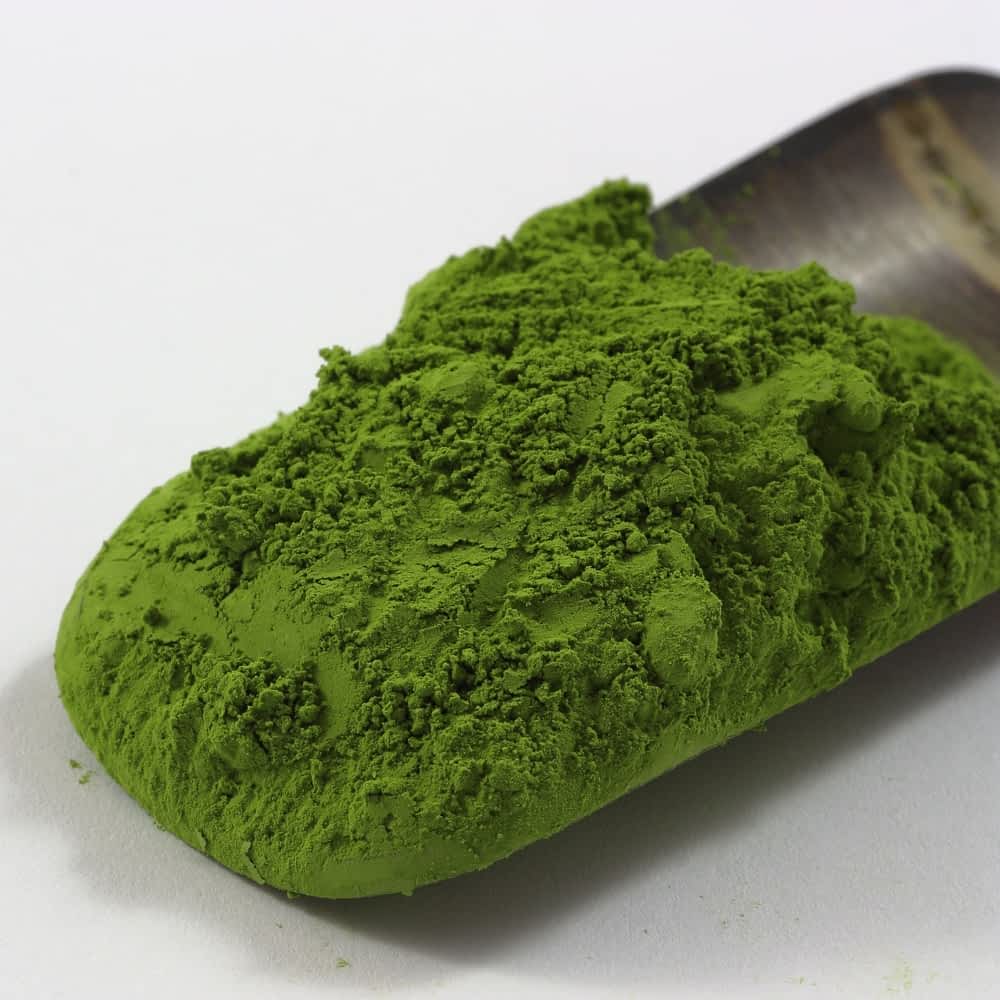
Matcha Taki BIO is a distinctive 100% Seimei matcha from Kagoshima, selected for its generous body, velvety texture and deeper nutty-cacao expression.
Made exclusively from first-harvest leaves, shaded under tents for four weeks and stone-milled, Taki combines walnut, cacao and grilled sesame with buttery vegetal depth and pronounced umami. Its substantial character makes it particularly rewarding as Usucha, while also allowing it to remain expressive with a restrained amount of milk.
Best For
Choose Matcha Taki when you enjoy a fuller, velvety matcha with pronounced umami and deeper notes of walnut, cacao and grilled sesame. We recommend discovering its Seimei character first as Usucha, then exploring cold matcha or a refined latte with only a restrained amount of milk.
From the Tea Garden
Taki comes from the same certified organic tea garden in Kagoshima as Matcha Aoyama and Matcha Yuki. The garden is run by a third-generation tea farmer specialising in Gyokuro and matcha, with particular attention given to first-harvest teas.
Although these matcha share the same garden, Taki is made from 100% Seimei. Its distinctly deeper, fuller and more nut-driven expression shows how strongly cultivar can influence the character of matcha.
Tea Repertoire Sensory Profile
Walnut · Cacao · Grilled Sesame
Full-bodied, velvety and deeply umami
Taki opens with a delicately sweet aroma reminiscent of baked pastry, followed by walnut and cacao. Once whisked, the aromatic profile becomes broader, revealing grilled sesame alongside its deeper vegetal character.
On the palate, savoury umami and walnut lead the experience, followed by cacao, grilled sesame and buttery steamed greens. The intensity comes from flavour concentration and body rather than pronounced bitterness.
Its velvety texture gives Taki considerable presence on the palate, followed by a long, gently sweet and nutty finish.
What defines Taki: its 100% Seimei character combines considerable body with walnut, cacao and savoury depth. These warm flavour associations describe its sensory profile; Taki is not a roasted matcha.
Why We Selected This Matcha
A Distinctive Expression of the Seimei Cultivar
Taki stood out because it offers something genuinely different within our Kagoshima matcha selection.
Aoyama and Yuki reveal two different expressions of Saemidori from this garden. Taki allows us to explore another variable: Seimei.
Its fuller body and deeper register of walnut, cacao and grilled sesame create a markedly different experience, while the underlying umami and vegetal character keep the tea balanced when prepared pure with water.
Our recommendation: choose Taki when you want to explore how cultivar can transform the sensory identity of matcha, even when origin, garden and craftsmanship remain closely related.
Origin & Craftsmanship
Matcha Taki comes from a JAS Organic, pesticide-free garden in Kagoshima. Its character is shaped by the combination of 100% Seimei, first-harvest leaves, four weeks of tent shading and stone milling.
First Harvest · Ichibancha
Taki is produced exclusively from the first harvest of the year. These spring leaves provide the foundation for its concentrated flavour, umami and texture.
4 Weeks of Tent Shading
Before harvest, the tea plants are shaded under tents for four weeks. Shading contributes to the development of the colour, depth and umami expected from matcha selected for drinking pure.
100% Seimei
Taki is made exclusively from Seimei. In this garden, the cultivar expresses itself through a substantial mouthfeel, pronounced umami and a distinctive walnut-cacao sensory direction.
Stone-Milled
After processing into tencha, the leaves are stone-milled into a fine matcha powder suitable for smooth dispersion and traditional whisking.
Why Seimei Matters
Tea Repertoire evaluates matcha through the complete path from garden to bowl: origin, cultivar, harvest, cultivation, craftsmanship, sensory profile and intended preparation.
How to Prepare Matcha Taki
Usucha
- Sift 1.5–2 g of Taki into a chawan.
- Add approximately 80 ml of water at around 80°C.
- Whisk briskly with a chasen until smooth and finely foamed.
- Drink immediately to experience the full Seimei character.
Usucha gives the clearest expression of Taki's walnut, cacao, grilled sesame, vegetal depth and umami.
Cold Matcha with Water
- Sift the matcha before preparation.
- Whisk first with a small amount of water until smooth.
- Add the remaining cold water.
- Serve over ice if desired.
Cold preparation gives a refreshing expression while preserving Taki's characteristic nutty-cacao and umami profile.
Refined Matcha Latte
- Sift 2.5–3 g of Taki into a bowl.
- Whisk thoroughly with the water until smooth.
- Add approximately 50–70 ml of warm milk.
- Keep the milk restrained so that Taki remains the dominant flavour.
Limited milk rounds Taki's texture while allowing walnut, cacao and umami to remain clearly perceptible.
Iced Matcha Latte
- Sift and whisk the matcha thoroughly with water.
- Fill a glass with ice.
- Add approximately 50–100 ml of cold milk.
- Pour the prepared matcha over the milk and ice.
Start with less milk for a more matcha-forward iced latte. Taki does not need a large milk proportion to create a satisfying drink.
We do not recommend Matcha Taki for Koicha. Suitability for Usucha does not automatically mean a matcha will remain equally balanced at the much greater concentration used for Koicha.
Want to understand how water, ratios and preparation style influence matcha?
Explore the Ultimate Guide to Matcha →Which Milk Works Best with Matcha Taki?
Taki's substantial body allows it to pair naturally with milk, but the aim is to complement rather than cover its Seimei character. We recommend keeping the milk proportion restrained.
Whole Dairy Milk
Whole milk reinforces Taki's velvety mouthfeel and complements its buttery, walnut and cacao notes. Used sparingly, it creates a rounded latte without masking the matcha.
Oat Milk
A neutral oat milk works particularly well with Taki's baked pastry, walnut and cacao dimensions while supporting its naturally full texture.
Soy Milk
Soy milk reinforces Taki's savoury and umami character and offers good body, although its own flavour will be slightly more noticeable.
Coconut Milk
Coconut can create an interesting contrast with cacao and walnut, but its aromatic character can dominate. Use it sparingly if you want Taki to remain clearly identifiable.
Tea Repertoire tip: for Taki, less milk is usually better. If you prefer a larger, milk-forward latte, consider Matcha Latte Supreme , which is selected specifically for that style of preparation.
Is Matcha Taki Ceremonial Grade?
Choose Matcha by Preparation, Not Simply by Grade
There is no universally recognised official grading system in Japan that formally defines matcha as “ceremonial”, “premium” or “culinary” grade.
At Tea Repertoire, we therefore guide customers primarily through origin, cultivar, harvest, cultivation, craftsmanship, sensory character and intended preparation.
Taki is selected for drinking pure with water as Usucha. In that practical sense it belongs within our ceremonial matcha selection. We do not, however, recommend it for Koicha.
Understand Matcha Grades & Quality →Which Matcha Is Right for You?
The best choice depends on the preparation and sensory profile you enjoy most. Taki occupies a distinctive place in the collection because of its 100% Seimei cultivar and deeper nutty-cacao expression.
Matcha Taki
Choose Taki for a velvety Seimei expression with walnut, cacao, grilled sesame and pronounced umami.
Best suited to: Usucha · Cold Matcha · Refined LatteMatcha Aoyama
Choose Aoyama for a refined Usucha-focused Saemidori profile with baked-pastry, nutty, vegetal and umami characteristics.
Discover Matcha Aoyama →Matcha Yuki
Choose Yuki for a creamier, fresher Saemidori expression with avocado, peas and cress accompanying generous umami.
Discover Matcha Yuki →Matcha Latte Supreme
Choose Matcha Latte Supreme when your main preparation is a larger, milk-forward hot or iced Matcha Latte.
Explore Matcha Latte Supreme →Tea Repertoire principle: let the preparation and sensory experience guide the matcha you choose — not simply the grade written on the packaging.
Continue Your Matcha Journey
Taki is a useful example of why understanding cultivar, origin and preparation gives you more information than relying on a generic grade alone.
Matcha Grades & Quality Guide
Understand matcha quality terminology and learn why preparation is often a more useful way to choose matcha.
Read the Matcha Grades & Quality Guide →The Ultimate Guide to Matcha
Explore matcha cultivation, processing, cultivars, preparation and sensory appreciation.
Explore the Ultimate Guide to Matcha →The Ultimate Matcha Latte Guide
Learn how matcha choice, ratios and different milks influence hot and iced Matcha Lattes.
Explore the Ultimate Matcha Latte Guide →How to Prepare an Iced Matcha Latte
Follow our practical method for preparing a smooth and refreshing Iced Matcha Latte.
Learn How to Prepare an Iced Matcha Latte →Complete Your Matcha Ritual
The right tools make matcha easier to prepare and help create a smoother, more consistent texture.
Chasen
A traditional bamboo whisk designed to disperse matcha evenly and create the fine foam associated with well-prepared Usucha.
Explore the Bamboo Matcha Whisk →Chawan
A matcha bowl provides enough space for the chasen to move freely and whisk Taki into a smooth, even preparation.
Explore Matcha Bowls →Chashaku
A traditional bamboo scoop used for measuring and transferring matcha before whisking.
Explore the Bamboo Matcha Scoop →Frequently Asked Questions
Find quick answers about Matcha Taki's cultivar, origin, preparation and sensory character.
What cultivar is Matcha Taki?
Matcha Taki is made from 100% Seimei. Its cultivar is one of the principal reasons Taki tastes noticeably different from Aoyama and Yuki, despite coming from the same Kagoshima garden.
Where does Matcha Taki come from?
Matcha Taki comes from a specialist tea garden in Kagoshima, Japan. The same garden also produces Tea Repertoire's Matcha Aoyama and Matcha Yuki.
Is Matcha Taki organic?
Yes. Matcha Taki is JAS Organic and pesticide-free.
Is Matcha Taki first-harvest matcha?
Yes. Taki is produced exclusively from first-harvest, or Ichibancha, leaves.
How long is Matcha Taki shaded?
The tea plants used for Taki are tent shaded for four weeks before harvest.
Is Matcha Taki stone-milled?
Yes. After processing into tencha, Taki is stone-milled into a fine matcha powder.
What does Matcha Taki taste like?
Taki has a full-bodied, velvety and deeply umami-driven profile, with baked-pastry, walnut, cacao and grilled sesame notes alongside a buttery vegetal character. The finish is long, gently sweet and nutty.
Is Matcha Taki suitable for Usucha?
Yes. Usucha is our primary recommendation for Taki. Use approximately 1.5–2 g of matcha with around 80 ml of water at approximately 80°C.
Can Matcha Taki be prepared as Koicha?
We do not recommend Taki for Koicha. A matcha that performs well as Usucha is not automatically suited to the much greater concentration required for Koicha.
Can I make a Matcha Latte with Matcha Taki?
Yes. Taki works particularly well in a refined Matcha Latte with limited milk. We recommend approximately 2.5–3 g of matcha, 100–150 ml of water and around 50–70 ml of milk.
Keeping the milk proportion restrained helps preserve its walnut, cacao and umami character.
Can I make an Iced Matcha Latte with Matcha Taki?
Yes. Taki's full-bodied character makes it well suited to an Iced Matcha Latte. Prepare 2.5–3 g of matcha with 100–150 ml of water, pour over ice and add approximately 50–100 ml of cold milk.
For a detailed method, follow our step-by-step Iced Matcha Latte preparation guide .
Can Matcha Taki be prepared cold without milk?
Yes. Taki can be prepared as cold matcha with water. This gives a refreshing expression while retaining its nutty, cacao and umami character.
What is the difference between Matcha Taki, Aoyama and Yuki?
All three come from the same organic Kagoshima garden, but they offer distinctly different sensory experiences.
Taki is 100% Seimei and offers the fullest, deeper nutty-cacao expression of the three.
Aoyama is Saemidori and has a refined, Usucha-focused profile built around baked pastry, nutty, vegetal and umami notes. Discover Matcha Aoyama .
Yuki is also Saemidori but is creamier and fresher, with avocado, peas and cress accompanying its umami character. Discover Matcha Yuki .
This comparison illustrates why cultivar and individual tea selection can matter as much as origin when choosing matcha.
How should I store Matcha Taki after opening?
Keep Matcha Taki tightly sealed and protected from heat, light, oxygen, moisture and strong odours. After opening, refrigeration can help preserve freshness.
If refrigerated, allow the sealed container to move towards room temperature before opening to help reduce condensation inside the packaging.