

Matcha Tannhäuser · Contrast Revealed Through Concentration
Avocado · Dark Chocolate · Broth-like Umami
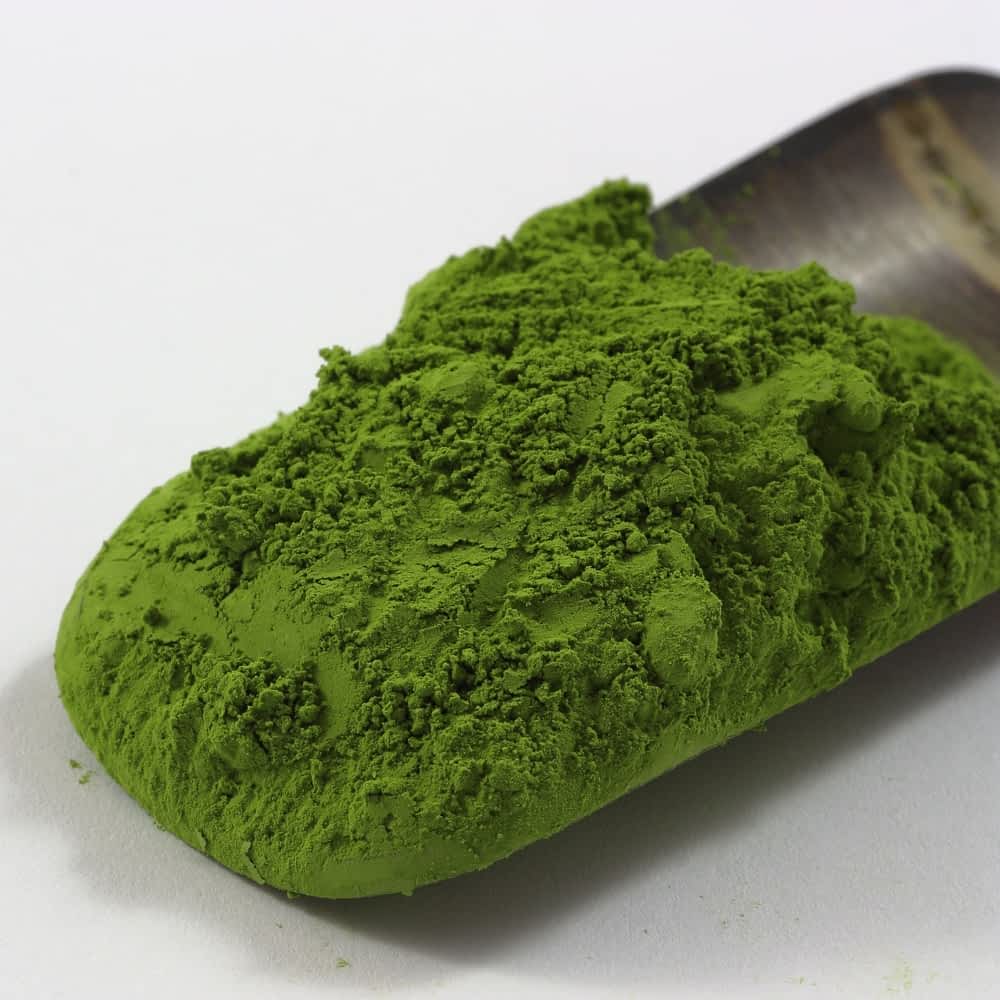
Matcha Tannhäuser is a first-harvest Uji Matcha blended from Asahi and Narino, selected principally for Koicha: the concentrated preparation in which its full body, very pronounced savoury umami and contrasting aromatic character are most clearly expressed.
Pronounced sweetness meets low bitterness and no perceived astringency, while avocado and watercress move towards dark chocolate, truffle and deep vegetal, broth-like umami. The result is a Matcha defined not by softness alone, but by tension, depth and a very long finish.
Best For
Choose Matcha Tannhäuser when you want to explore Matcha at high concentration and appreciate savoury depth, full body and contrast. Koicha is its signature preparation. If your priority is creamy Koicha without perceived bitterness, consider Matcha Eroica; if you mainly drink Matcha with milk, Matcha Latte Supreme is the more appropriate choice.
From the Tea Garden
Tea Repertoire Sensory Profile
Vegetal · Deep · Umami-rich
Avocado · Dark Chocolate · Broth-like Umami
Tannhäuser opens with avocado and fresh watercress before moving towards darker notes of chocolate and truffle. Its centre is full and intensely savoury, with very pronounced vegetal and broth-like umami.
Pronounced sweetness is balanced by low bitterness, while no astringency is perceived. The contrast becomes particularly clear at Koicha concentration, where the tea remains full, creamy, concentrated and persistent rather than becoming one-dimensional.
The finish is very long, moving back towards an almond-like, nutty character after the deeper savoury core.
At Koicha concentration: Tannhäuser becomes full, creamy, concentrated, deep and persistent. Its very pronounced savoury umami and low bitterness create a deliberate sense of contrast while the finish remains very long.
Why We Selected Matcha Tannhäuser
Tension in Harmony
We selected Matcha Tannhäuser because its identity is built around contrast. Its profile moves between fresh vegetal notes and darker chocolate and truffle tones, pronounced sweetness and low bitterness, before developing into very pronounced savoury umami.
That tension becomes particularly expressive when the Matcha is prepared as Koicha. Concentration does not simply make Tannhäuser stronger: it brings its different dimensions closer together and makes its full body, savoury depth and long finish central to the experience.
Tannhäuser is made from Asahi and Narino grown in separate plots within the same garden. We keep this production information separate from our sensory observations: we do not assign individual flavour notes to a cultivar without specific evidence.
Origin & Craftsmanship
Matcha Tannhäuser comes from a specialist Matcha producer in Uji, Kyoto Prefecture, with whom Tea Repertoire works directly and whose garden we have personally visited. The producer's identity remains private, while the product information below reflects the specific production evidence established for Tannhäuser.
Uji · Kyoto Prefecture
Tannhäuser is produced in Uji, Kyoto Prefecture and is designated as Uji Matcha. The Asahi and Narino components come from separate plots within a single Matcha garden.
First Harvest · Hand-Picked
Tannhäuser is made entirely from first-harvest leaves picked in May. The leaves used for both cultivar components are hand-picked.
Four Weeks of Tana Shading
Both cultivar components are shaded for four weeks using the traditional tana method before harvest.
Tencha · Stone-Milled in Uji
Asahi and Narino are harvested and processed separately into Tencha and are separately stone-milled in Uji. The Tencha is matured until November before the finished Matcha is prepared for release.
An Asahi & Narino Blend
The exact cultivar proportions are not stated. We describe the Asahi–Narino composition as a production fact and evaluate avocado, watercress, dark chocolate, truffle and broth-like umami as sensory observations of the finished Matcha rather than assigning individual aromas automatically to either cultivar.
How to Prepare Matcha Tannhäuser
Koicha
- Sift 4 g of Matcha Tannhäuser into a warmed, dry chawan.
- Add 30 ml of water at 80°C.
- Use a chasen to slowly combine and knead the Matcha into the water.
- Continue until the preparation is dense, smooth and homogeneous. Koicha should have little or no foam.
- Drink slowly to follow the transition from vegetal freshness through darker aromas into its concentrated savoury finish.
Usucha
- Sift 2 g of Matcha Tannhäuser into a dry chawan.
- Add 60 ml of water at 80°C.
- Whisk briskly with a chasen until the Matcha is evenly suspended and a fine surface foam forms.
- Drink immediately.
Cold Matcha with Water
- Sift 2 g of Matcha Tannhäuser.
- Add a small quantity of cold water and disperse thoroughly until smooth.
- Add the remaining cold water to reach 150 ml.
- Whisk or shake thoroughly and serve immediately.
Koicha is not simply Usucha with more Matcha. It uses a much higher Matcha-to-water concentration and a different technique. Instead of rapidly whisking to create foam, the chasen is used slowly to combine and knead the Matcha into a dense preparation. Tannhäuser is not recommended for Matcha Latte, iced latte or baking.
How We Think About Matcha Quality
Choose Matcha by Preparation, Not Simply by a Grade Label
There is no single universal official Japanese grading system that formally defines every Matcha as “ceremonial”, “premium” or another marketing grade.
At Tea Repertoire, we therefore explain Matcha through its origin, cultivar or blend, harvest, cultivation, craftsmanship, sensory character and intended preparation.
Tannhäuser is a first-harvest Uji Matcha made from Asahi and Narino, shaded for four weeks using tana and stone-milled in Uji. For choosing it correctly, however, its most useful characteristic is that it was selected specifically to remain expressive at the high concentration of Koicha.
That does not make Tannhäuser automatically better than a Matcha selected for Usucha, latte or everyday use. It makes it a different Matcha for a different drinking experience.
Read the Matcha Grades & Quality Guide →Which Matcha Should You Choose?
Start with the preparation and sensory experience you want. Tannhäuser, Eroica and Bliss are all intended primarily for pure Matcha, but they answer different preferences. If milk is central to your preparation, choose a Matcha selected specifically for that purpose.
Matcha Tannhäuser
Choose Tannhäuser if you want Koicha with a full body, very pronounced vegetal and broth-like umami, pronounced sweetness, low bitterness and a profile built around aromatic contrast.
Best fit: Koicha ★★★★★ · Usucha ★★★★☆ · Cold Matcha ★★★★☆Matcha Eroica
Choose Eroica if Koicha is also your priority but you prefer marzipan, buttered greens and very pronounced creamy umami with no perceived bitterness or astringency.
Discover Matcha Eroica →Matcha Bliss
Choose Bliss when Usucha is your priority and you prefer a medium-bodied, refreshing profile built around avocado, almond and marine umami rather than the concentration of Koicha.
Discover Matcha Bliss →Matcha Latte Supreme
If Matcha Latte or Iced Matcha Latte is your principal drink, Tannhäuser is not the appropriate choice. Matcha Latte Supreme is selected specifically to remain expressive when combined with milk.
Discover Matcha Latte Supreme →Tea Repertoire principle: a higher price, a particular cultivar or suitability for Koicha does not automatically make one Matcha better than another. Choose according to the preparation, sensory character and experience you actually want.
Tea Repertoire Academy
Explore our practical guides to understand how origin, cultivar, preparation and sensory structure can help you choose and prepare Matcha more precisely.
Matcha Grades & Quality Guide
Understand why Matcha cannot be reduced to a single grade label and how Tea Repertoire evaluates quality through production, sensory character and intended preparation.
Read the Matcha Grades Guide →The Ultimate Guide to Matcha
Explore Matcha cultivation, production, preparation, flavour, essential tools and the differences between Koicha and Usucha.
Explore the Ultimate Matcha Guide →Complete Your Matcha Ritual
Tannhäuser is particularly rewarding when prepared with traditional Matcha utensils. For Koicha, the chasen is used slowly to incorporate and knead the concentrated Matcha rather than rapidly whisking it into foam.
Chasen
The bamboo Matcha whisk is used to combine Matcha and water. For Tannhäuser Koicha, work slowly until the preparation becomes dense, smooth and homogeneous.
Explore the Bamboo Chasen →Chashaku
A traditional bamboo scoop used for handling and measuring Matcha before preparation.
Explore the Bamboo Chashaku →Chawan
A Matcha bowl provides the space and shape needed to work the tea with a chasen, whether kneading concentrated Koicha or whisking lighter Usucha.
Explore Matcha Bowls & Chawan →Matcha Tannhäuser FAQ
Answers to common questions about Matcha Tannhäuser, its Asahi and Narino blend, sensory profile and recommended preparations.
What is Matcha Tannhäuser?
Matcha Tannhäuser is a first-harvest Uji Matcha from Kyoto Prefecture, made from a blend of Asahi and Narino cultivars. Tea Repertoire selected it principally for Koicha, where its full body, very pronounced savoury umami and contrasting aromatic profile are particularly expressive.
Where does Matcha Tannhäuser come from?
Tannhäuser comes from Uji in Kyoto Prefecture, Japan, and is designated as Uji Matcha. Its Asahi and Narino components are grown in separate plots within the same Matcha garden.
Which cultivars are used in Matcha Tannhäuser?
Tannhäuser is a blend of Asahi and Narino. The two cultivars are grown in separate plots within the same garden and are harvested and processed separately into Tencha before being stone-milled in Uji.
We do not automatically assign individual tasting notes to either cultivar. The sensory profile describes Tea Repertoire's tasting of the finished Matcha.
What does Matcha Tannhäuser taste like?
Tea Repertoire describes Tannhäuser as vegetal, deep and umami-rich, with signature notes of avocado, dark chocolate and broth-like umami. Watercress, truffle and almond also appear through the tasting progression.
It has pronounced sweetness, low bitterness, no perceived astringency, a full body, very pronounced vegetal and broth-like umami and a very long finish.
Is Matcha Tannhäuser suitable for Koicha?
Yes. Koicha is Tannhäuser's signature preparation and receives our highest suitability rating of ★★★★★. Its full body, concentrated texture, very pronounced savoury umami and low bitterness remain expressive at high concentration.
How should I prepare Matcha Tannhäuser as Koicha?
Use 4 g of Matcha Tannhäuser with 30 ml of water at 80°C. Instead of rapidly whisking for foam, slowly combine and knead the Matcha with a chasen until the preparation becomes dense, smooth and homogeneous.
What is the difference between Koicha and Usucha?
Koicha is a highly concentrated Matcha preparation using much more powder relative to water. It is slowly incorporated or kneaded with a chasen and normally has little or no foam.
Usucha uses more water relative to Matcha and is whisked briskly to produce a lighter preparation with fine surface foam. For Tannhäuser, we recommend 4 g / 30 ml for Koicha and 2 g / 60 ml for Usucha.
Can I prepare Matcha Tannhäuser as Usucha?
Yes. Tannhäuser receives ★★★★☆ for Usucha. Prepare 2 g with 60 ml of water at 80°C and whisk briskly with a chasen. Usucha offers a lighter expression of Tannhäuser while retaining its full body, vegetal character and savoury depth.
Can I drink Matcha Tannhäuser cold?
Yes. Cold Matcha with water receives ★★★★☆. Use 2 g of Tannhäuser with 150 ml of cold water. Disperse the Matcha first with a small quantity of water, then add the remainder and whisk or shake thoroughly.
Is Matcha Tannhäuser suitable for Matcha Latte?
We do not recommend Tannhäuser for Matcha Latte or Iced Matcha Latte. It was selected for concentrated pure Matcha, particularly Koicha. If milk is central to your preparation, choose Matcha Latte Supreme instead.
What is the difference between Matcha Tannhäuser and Matcha Eroica?
Both are Uji Matcha selected principally for Koicha, but their sensory profiles are different. Tannhäuser is an Asahi and Narino blend with avocado, dark chocolate and broth-like umami, pronounced sweetness and low bitterness.
Matcha Eroica is 100% Narino and moves towards marzipan, buttered greens and creamy umami, with no perceived bitterness or astringency. Neither is presented as a higher grade; choose according to the Koicha experience you prefer.
Is Matcha Tannhäuser ceremonial grade?
Tea Repertoire does not rely on “ceremonial grade” as a universal measure of Matcha quality. Instead, we explain Tannhäuser through its Uji origin, Asahi and Narino composition, first harvest, four-week tana shading, craftsmanship, sensory profile and preparation suitability.
Tannhäuser is specifically selected for Koicha, but suitability for Koicha should not be interpreted as a universal quality rank above Matcha selected for Usucha, cold preparation or milk.
Learn more in our Matcha Grades & Quality Guide .
Why is it called Tannhäuser?
The name reflects Tea Repertoire's curatorial interpretation of the tension and contrast perceived within the finished Matcha. It references Wagner's Tannhäuser as a cultural naming story, rather than as a technical explanation of the tea's flavour.